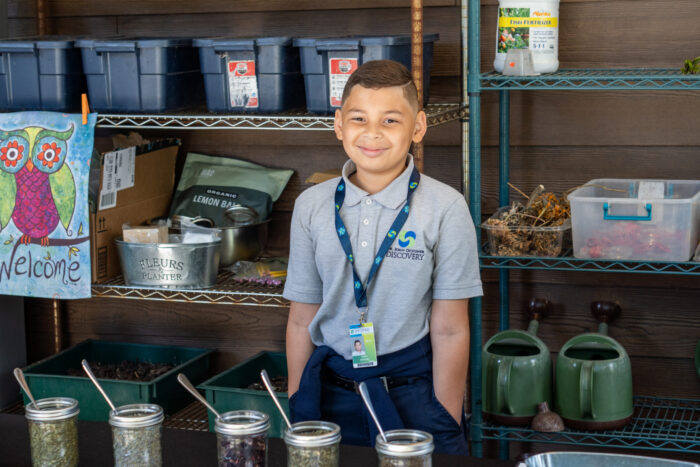
How Outdoor Classrooms Are Enhancing Learning
Today’s educators are looking beyond the chalkboard. They’re discovering that some of the most powerful learning takes place outside the classroom walls. From culinary gardens that inspire connection and collaboration to teaching kitchens that invite curiosity and experimentation, nontraditional classrooms are reshaping the way students engage with the world, their food, and themselves.
What is an Outdoor Classroom?
Outdoor classrooms play a vital role in making learning more dynamic, engaging, and relevant. This is especially true when they’re connected to food and nutrition education.
School gardens provide students with opportunities to engage in meaningful, hands-on learning that reinforces academic concepts and promotes long-term well-being.
In these spaces, students build real-world skills by growing, preparing, and sharing food. They begin to understand where their food comes from, how to care for the environment, and how to work together toward a common goal. At the same time, they develop essential life skills that extend far beyond the classroom.
Here are a few of the lasting benefits outdoor classrooms provide:
- Learning That Engages the Whole Child
Outdoor classrooms tap into a child’s natural curiosity. In a culinary garden, students are free to move, explore, and engage all five senses. This time enhances focus, motivation, and memory retention, particularly for students who struggle in traditional academic settings.
- Nutrition Education That Sticks
Outdoor classrooms support child nutrition education by turning healthy eating into a lived experience where kids learn what to eat and why it matters.
These outdoor learning experiences naturally lead children to ask questions like:
- Where does my food come from?
- What does my body need to feel good?
- How can I help my family make healthy choices?
The impact extends into homes and communities—when young students grow or prepare the food they eat, they’re more likely to try new fruits and vegetables.
- Life Skills Gained in the Garden
Outdoor classrooms are ideal spaces for developing skills that students will carry with them throughout their lives.
As they plant, harvest, and cook together, students practice:
- Responsibility
- Teamwork
- Patience
- Problem-solving
- Communication
- Self-confidence
When a child grows their own salad and shares it with classmates, they discover pride, leadership, and a deeper belief in themselves.
Opportunities Grow Beyond the Classroom!
At Emeril Lagasse Foundation, we support hands-on food education that helps students grow academically, emotionally, and socially.
Our Signature Program, Emeril’s Culinary Garden & Teaching Kitchen, integrates seed-to-table education into K–8 schools, beginning outdoors in the garden and extending into the classroom and kitchen. From there, our broader initiatives build on the same foundation: the Aarón Sánchez Impact Fund expands educational and professional opportunities for aspiring chefs while advancing nutrition education and food access for Latino youth, and our Community Grants Program supports culinary, nutrition, and arts education with a focus on life skills development.
Together, these initiatives create lasting opportunities for young people to learn, lead, and thrive. Explore how you can support or grow with us today.