Embracing Food and Nutrition as a Form of Self-Care
Learning how to care for oneself is a lifelong journey. For many, it begins with something as simple as food. Whether cooking at home or tending to plants in a school garden, food sits at the center of some of life’s most meaningful lessons.
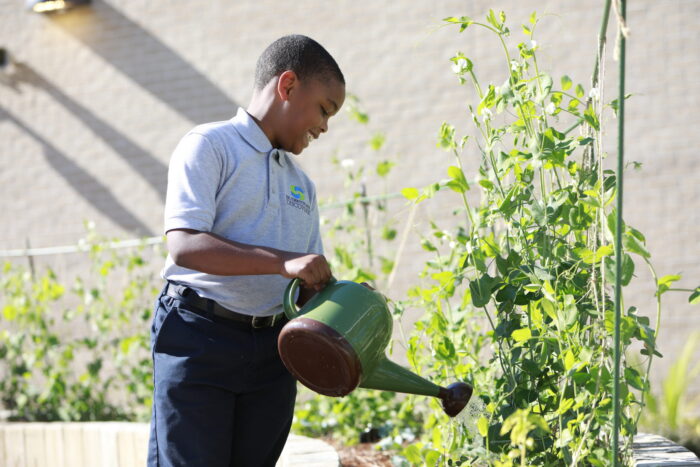
At Emeril Lagasse Foundation, we believe food is a powerful teaching tool. It brings people together, encourages thoughtful choices, and helps young people build habits that support lifelong well-being. When students are given the opportunity to grow, prepare, and understand where their food comes from, they begin to view food as a way to support both their health and their sense of self.
Building On the Basics of Healthy Eating
Food education emphasizes the values of healthy eating. That important knowledge is one part of the bigger picture.
Fully realized nutrition education begins when students understand that what they eat affects how they feel and function. In culinary gardens and teaching kitchens, they explore these ideas directly by preparing meals that support their physical, emotional, and mental well-being.
That sense of agency can lead to healthier routines, increased self-reliance skills, and a stronger connection to food overall. Moreover, when students understand the ‘why’ behind food, they can then step into the kitchen and apply that knowledge in ways that build confidence.
Confidence Starts in the Kitchen and Garden
Self-care also includes helping kids feel capable and confident. When students learn to garden and cook, they practice vital life skills that support both independence and emotional growth.
- They follow instructions.
- They think critically and solve problems.
- They practice how to react, pivot, and adjust to situations.
- They discover pride and accomplishment in their work.
- They collaborate and learn how to interact with others.
Each harvest or completed recipe becomes a moment of accomplishment, reinforcing what students are capable of and building self-trust they carry into their classrooms, homes, and communities.
Just as important, these hands-on experiences create space for emotional awareness. Cooking can be calming. Trying a new ingredient can build courage. Sharing a dish can strengthen connections with others. Over time, youth become aware of these shifts and their growth.
In the garden, this awareness deepens. As students see the care, patience, and effort that goes into growing something nourishing, they begin to understand what it means to tend to themselves and others — lessons they will carry for life.
Growing Together, One Recipe at a Time
At Emeril Lagasse Foundation, we support programs that give students meaningful opportunities to experience food as a tool for self-care. Through our signature program, Emeril’s Culinary Garden & Teaching Kitchen, The Aarón Sánchez Impact Fund, and our Community Grants Program, we help young people gain skills, confidence, and a deeper connection to their health and community.