How Culinary Gardens Are Bringing STEM Learning to Life
Across the country, culinary gardens and teaching kitchens are helping students see the world (and themselves) in an all-new light through STEM and food education integration. When young people grow food, build structures, measure space, and use tools to solve real problems, abstract classroom concepts are made real. What once felt like a challenge becomes an opportunity for discovery, deeper understanding, and personal growth.
Garden classrooms are fostering new growth.
For students who may have limited access to hands-on enrichment opportunities or who struggle in traditional academic settings, programs like Emeril’s Culinary Garden & Teaching Kitchen can create new pathways for engagement and success.
Science comes alive in the soil.
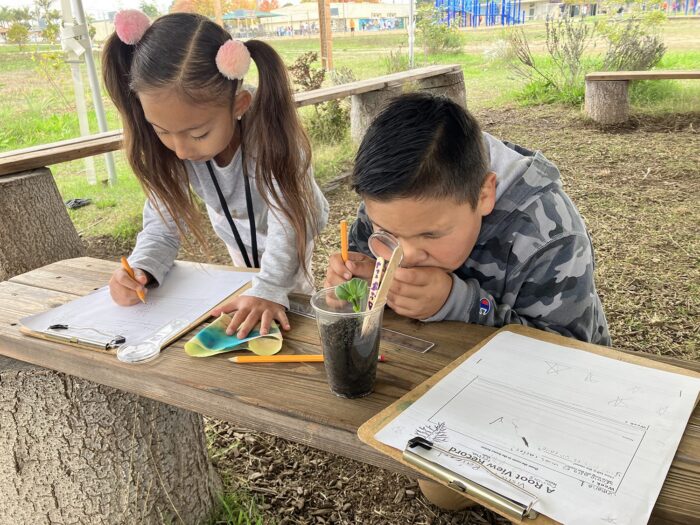
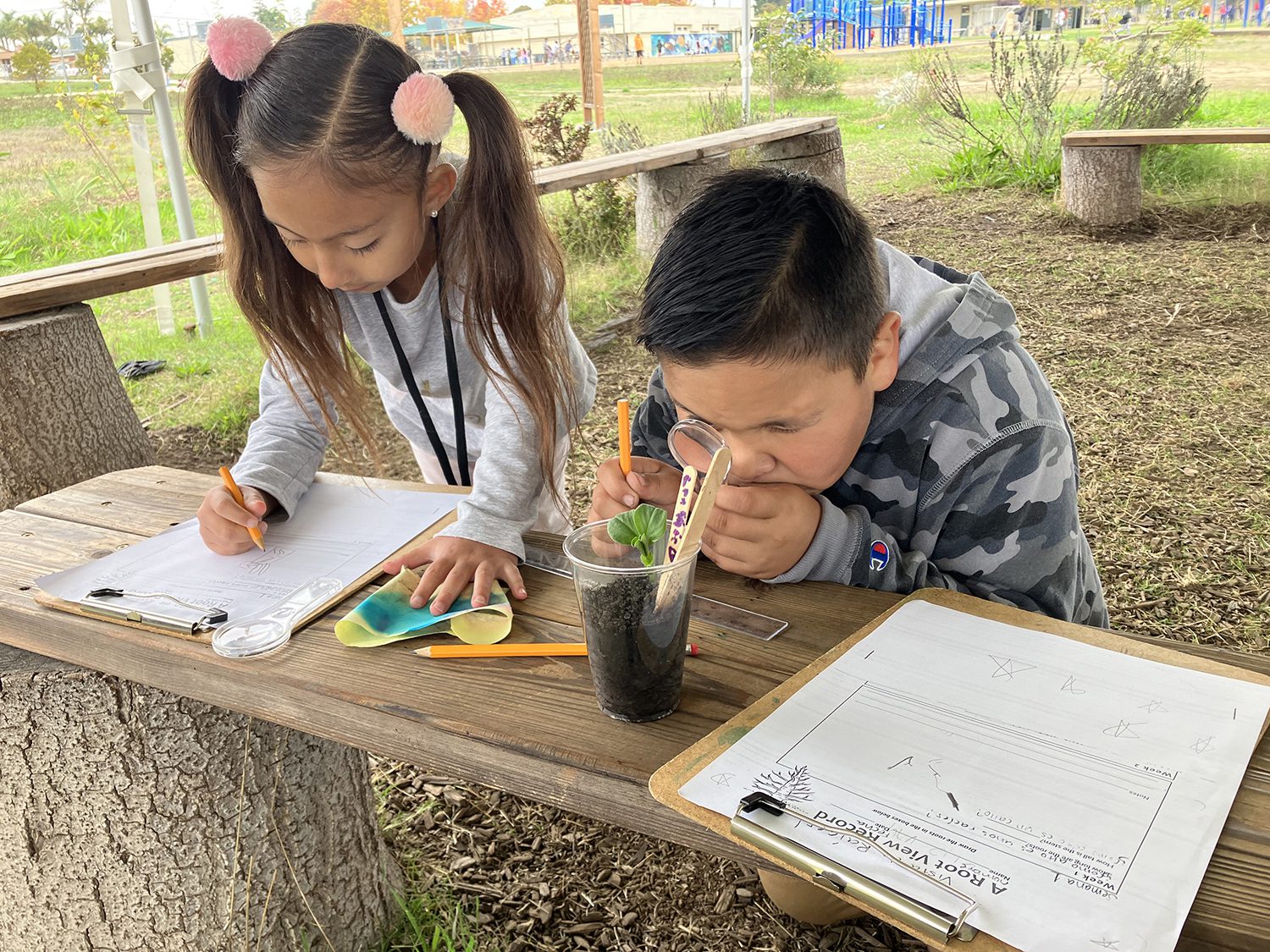
The garden is a living science lab where students can observe plant biology up close, from germination to decomposition. For teachers, this creates a natural bridge between classroom instruction and observable evidence. When a student has watched a bean plant push through the soil and grow toward the light, photosynthesis becomes a real-life process rather than a textbook concept.
Seasonal cycles, weather patterns, soil composition, and the role of insects in an ecosystem all become approachable when students are working in a space where those systems are actively unfolding.
As students observe change over time, they also develop important life skills, such as curiosity, patience, and confidence in their ability to learn.
Technology extends the learning.
Tech integration in school garden curriculum has grown significantly. Today’s students use digital tools to track weather data, log plant growth, research varieties, and compare outcomes across growing seasons. Some schools even use sensors to monitor soil moisture and temperature, giving students real datasets to analyze and interpret.
The intersection of physical and digital learning prepares students to work with data in ways that are increasingly relevant to careers in agriculture, environmental science, public health, and beyond.
Engineering concepts are put into action.
Gardens inspire problem-solving while connecting us more deeply to the food we eat and the role we play in preparing it.
- How do you build a trellis that will support a climbing plant?
- How do you design an irrigation system that waters roots without flooding seedlings?
- What structure will keep pests out while letting pollinators in?
Questions such as these help students think like engineers at every grade level. Young people learn to identify problems, consider constraints, test solutions, and adjust in the moment. The outcome is youth who are ready to tackle challenges with tested problem-solving skills applicable to all areas of life.
Math’s impact becomes measurable.
Math can be challenging for many students. In the garden, however, equations become another tool for growing. A school garden curriculum creates a new context for learning, showing students that math applies to the world around them.
Tasks like measuring planting depth and row spacing, or tracking plant growth over time, require students to put math into practice. Every measurement and calculation has a purpose because the success of the garden depends on it. As students see the direct results of their work, classroom concepts become more meaningful, and the confidence they build extends far beyond the garden.
For educators working to close learning gaps or build fluency in mathematical reasoning, the garden offers repeated, low-stakes opportunities to practice skills in context.
For teachers ready to start…
You don’t need a full outdoor classroom or a large budget to bring this into your classroom. The most effective garden and kitchen programs often start small and grow from there. A few practical places to begin:
- Start with what you have. Container gardens, raised beds, or even windowsill herb kits can introduce the same core concepts as a full school garden curriculum. The learning isn’t in the scale but in the process.
- Connect it explicitly to your standards. Students benefit when teachers name the STEM skill in action. Pause during a planting activity to ask: What’s the variable here? What would we measure to know if this worked? Making the academic connection out loud reinforces that the garden is an extension of the classroom.
- Document student observations. Journals, data logs, and photography provide students with a record of change over time and teachers with evidence of learning that extends well beyond a single lesson.
- Incorporate other subject areas. Garden and kitchen learning naturally facilitates language arts, social studies, and health. Cross-curricular planning with colleagues can deepen the impact without adding to your workload.
- Bring in community partners. Local organizations, culinary professionals, and nonprofits working in food and garden education can provide resources, expertise, and ongoing support — especially in the early stages.
Emeril Lagasse Foundation supports schools directly through our signature program, Emeril’s Culinary Garden & Teaching Kitchen, a national education initiative that integrates gardens and teaching kitchens as interactive learning environments. Together with school partners, we’re helping students make meaningful connections between core subjects and the world of food, and STEM learning is central to that work.
Exciting opportunities can grow from unexpected places.
To learn more about how Emeril Lagasse Foundation supports schools through culinary and garden education, visit our official page and follow us on Facebook, LinkedIn, and Instagram.