What is seed-to-table education?
For many students, food begins at the grocery store or in the cafeteria line. As an educator, you’ve likely seen how this disconnect from where food comes from affects how children think about what they eat.
Seed-to-table education changes that.
Through hands-on experiences in school gardens and teaching kitchens, students gain a deeper appreciation for healthy food and its origins. It also changes the way children see themselves, cultures, and communities. Along the way, children are building confidence, curiosity, and life skills, while discovering how food connects us all.
Unearthing the Basics of Seed-to-Table Education
Seed-to-table education follows food’s natural lifecycle.
Students begin by planting seeds and observing how they grow with time. Throughout the process, educators and parents witness children do the same as they learn about soil health, water cycles, and the responsibility and patience needed to help seedlings grow.
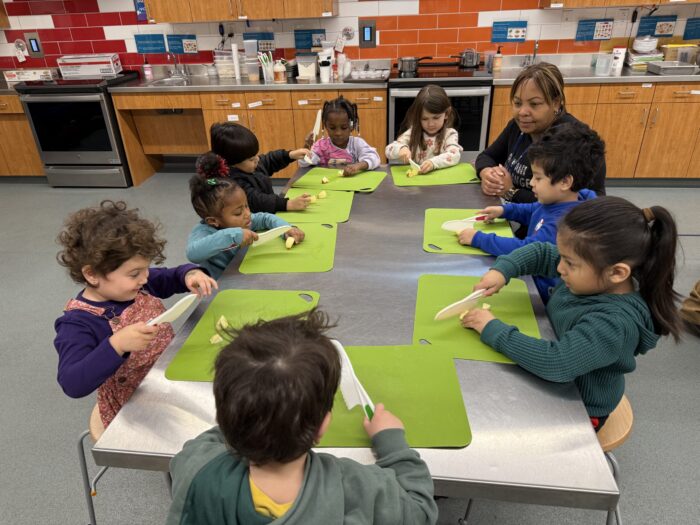
When fruits and vegetables are ready to harvest, the learning continues in the teaching kitchen. Students bring fresh ingredients indoors and work together to transform them into simple meals. In the process, kids learn practical culinary techniques such as measuring, chopping, cooking, and food safety.
For educators, the garden and kitchen become natural extensions of the classroom – spaces where science, math, art, health, and social studies come to life. Each step in the journey reinforces what’s next. Students see how science connects to agriculture, how agriculture connects to nutrition, and how cooking brings it all together.
As students move from garden to kitchen, they are also introduced to the stories behind the food they grow and prepare. Ingredients carry history—where they come from, the backgrounds that shaped them, the people who first brought them to the table and our neighbors who help do so today.
This integrated approach helps students understand the food system while building practical skills that will be carried into life. When family members, local chefs, and educators are brought into the mix, unified seed-to-table education creates healthy communities through food.
Why Hands-On Food Education Matters
For educators looking to deepen student engagement, hands-on nutrition and culinary education offer a natural complement to traditional classroom instruction. A small raised garden bed or a single cooking lesson can open the door to meaningful, cross-curricular learning.
Programs like Emeril’s Culinary Garden & Teaching Kitchen are connecting lessons from the garden and kitchen to what students are learning in the classroom.
A single lesson can bring together multiple subjects:
- Measuring ingredients reinforces math skills
- Observing plant growth introduces biological concepts
- Discussing nutrients connects to health and wellness education
- Preparing recipes encourages teamwork and communication
Students often feel a stronger sense of ownership over learning as active participants. This hands-on experience also creates space for something deeper. As students grow, prepare, and share food, they begin to take pride in their work and in who they are.
As a student at Starlight Elementary in Watsonville, California, shared with a teacher, “My skin is brown, the soil is brown, and I know I am beautiful because you say the soil is beautiful.”
It’s a simple and important reminder that time in the garden and kitchen helps children grow in confidence and connection. Every seed planted and every meal shared creates opportunities for learning and growth—a powerful place to begin.
Growing Together, One Recipe at a Time
At Emeril Lagasse Foundation, we believe food is one of the most powerful tools for learning we have. Through Emeril’s Culinary Garden & Teaching Kitchen, Aarón Sánchez Impact Fund, and our Community Grants Program, we help young people gain skills, confidence, and a deeper connection to their health and community.