More Hands Do More Good in the Teaching Kitchen
Key Takeaways
|
Cooking is a communal experience. Whether helping family with dinner, preparing snacks for friends, or studying under a culinary mentor, food has a way of bringing people together. The same can be said of teaching kitchens, the hands-on learning environments where students, educators, families, and community partners each have a role to play.
What is a teaching kitchen?
A teaching kitchen may look familiar at first, with cutting boards, mixing bowls, sinks, and other tools. However, what makes it different from a traditional kitchen is its purpose.
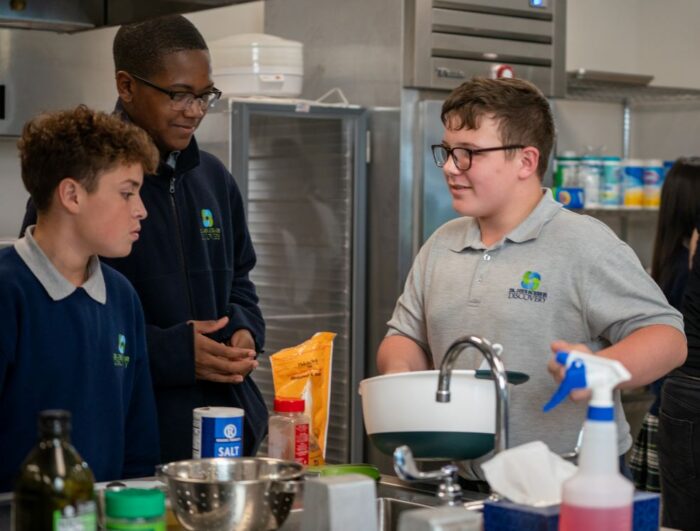
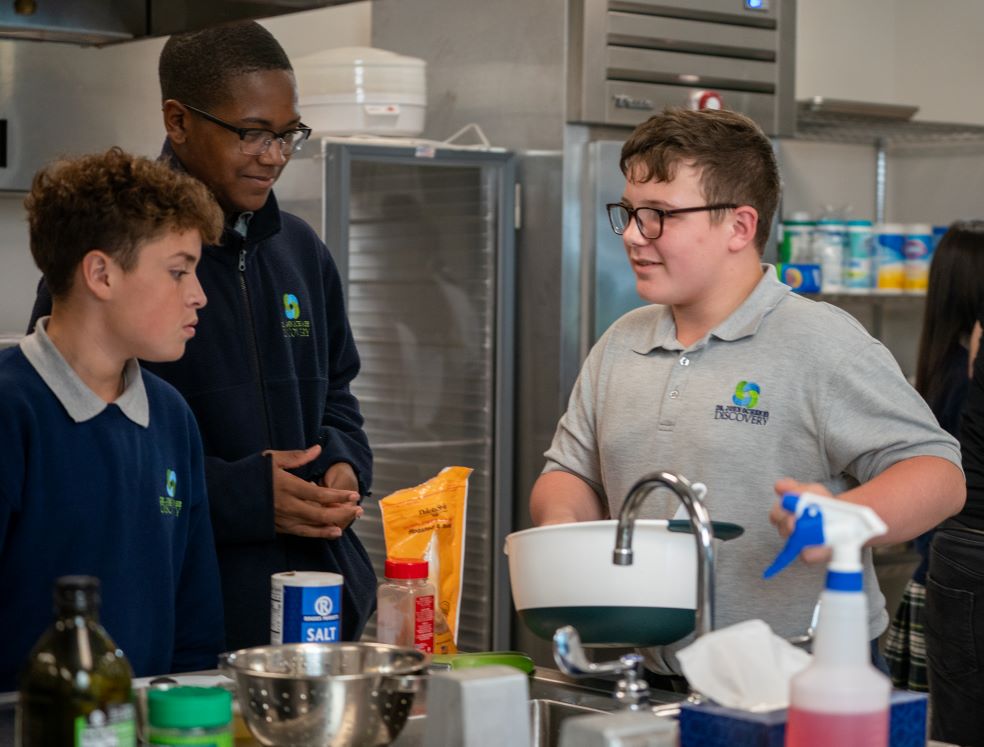
Culinary classrooms, like the ones found in Emeril’s Culinary Garden & Teaching Kitchen, bring students and teachers together for a dynamic, hands-on learning experience where each plate holds purpose. Teaching kitchens in schools create shared experiences that carry over into other areas of learning, helping classes develop practical life skills that support everyday health and well-being.
For example, consider what happens when students prepare a recipe.
Fractions become useful when a recipe needs to be doubled. Science unfolds as heat changes an ingredient’s texture. Reading matters when following a sequence of instructions. Teamwork becomes necessary when several students are responsible for getting one meal to the table.
And when something goes wrong? There is learning there, too. Students adjust. They ask questions. They try again.
Cooking gives young people an opportunity to put knowledge into practice and see the outcome for themselves. The hands-on process also encourages students to work together, making teaching kitchens inherently collaborative spaces. Every successful lesson depends on people working together, from the educators guiding the experience to the families, mentors, community organizations, and supporters who help the learning continue beyond the kitchen.
More hands do more good.
A supportive community is a key ingredient for a successful teaching kitchen. Each person brings something different to the experience, helping lessons take hold in the classroom and continue well beyond it.
- Schools and educators create the foundation.
Teachers connect hands-on culinary experiences to classroom learning. A cooking lesson can reinforce math or science one day and introduce a conversation about geography, history, or culture the next.
- Community-based organizations and mentors expand the experience.
Local nonprofits, chefs, gardeners, and other community partners bring resources, knowledge, and lived experience into the learning environment. A mentor can introduce a new technique, share a career path, or simply be another trusted adult encouraging a young person to keep learning and growing.
- Students make learning their own.
Every student arrives with different experiences, interests, and traditions. Cooking gives young people room to contribute their perspectives while building confidence through participation. As a result, both the responsibility and the accomplishment belong to the group.
- Families keep the lessons moving.
A recipe prepared at school may become dinner at home. A vegetable first tasted during class might show up on a future grocery list. Students can teach siblings how to measure an ingredient or ask a parent about a dish connected to family history, creating another place for learning to take root.
- Donors and supporters help make participation possible.
Teaching kitchens require equipment, ingredients, curriculum, trained educators, and continued investment. Philanthropic and community support provide schools and nonprofit organizations with resources that expand access to new experiences and help programs grow over time.
The most exciting part of this shared growth is the significance of each role. No single group creates the outcome alone. Like the ingredients of a fine-tuned recipe, each person adds something unique to the experience.
Let’s cook up more opportunities!
What begins in a teaching kitchen can reach far beyond it. To learn more about how Emeril Lagasse Foundation supports schools through culinary and garden education, visit our official page and follow us on Facebook, LinkedIn, and Instagram.
FAQs
What is a teaching kitchen?
A teaching kitchen is a hands-on learning environment where participants develop practical cooking, nutrition, and life skills through experience. Teaching kitchens can exist in schools, community organizations, health care settings, and other environments.
What do students learn in a teaching kitchen?
Students learn cooking techniques, food safety, nutrition, teamwork, communication, problem-solving, and other practical life skills. School-based programs can also connect cooking activities to subjects such as math, science, reading, and social studies.
How is a teaching kitchen different from a regular kitchen?
A regular kitchen is primarily designed to prepare food. A teaching kitchen is intentionally structured around instruction and participation, giving students opportunities to practice life skills rather than simply watch someone else cook.
Why are teaching kitchens useful in schools?
Teaching kitchens allow students to apply classroom concepts in a practical setting while developing skills they can use outside school. Cooking also creates opportunities to explore nutrition, culture, teamwork, and personal responsibility.
Do teaching kitchens work with school gardens?
Teaching kitchens and school gardens naturally reinforce one another. Pairing a teaching kitchen with a school garden lets students experience the journey from growing an ingredient to preparing and eating it. Emeril’s Culinary Garden & Teaching Kitchen integrates both spaces as interactive learning environments in elementary and middle schools across the country.