Seven Life Skills Children Learn Through Gardening
Growth goes beyond what you can see in a classroom garden. Just as roots quietly gather nutrients beneath the soil, gardening nurtures skills that support children in school, relationships, and everyday life. Each seed planted and each small act taken leaves a lasting mark.
Gardening cultivates essential life skills
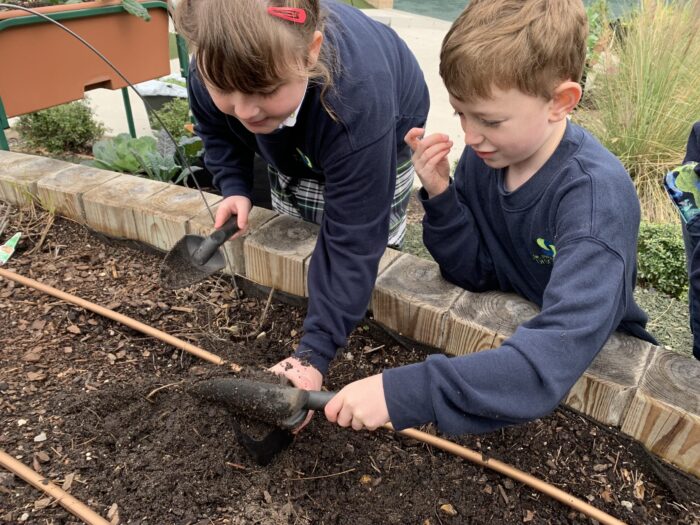
Picture a group of fourth graders gathered around a raised garden bed, debating whether their kale needs more sun or more water. In that moment, they’re practicing communication, reasoning, and teamwork.
This is the power of garden-based learning.
School gardens and teaching kitchen programs work hand in hand to transform everyday spaces into living classrooms. As students plant, tend, harvest, and eventually prepare the foods they grow, they naturally build essential life skills that help them flourish.
- Responsibility
Plants rely on consistent care, from watering and weeding to checking for signs of growth. When children tend to a garden, they see firsthand how their actions impact the world around them. The garden becomes a daily reminder that showing up, lending a hand, and following through truly matter.
- Patience
Even the healthiest seeds take time to sprout. As students wait for crops to grow, they learn to observe, trust the process, and appreciate slow, steady progress — an invaluable lesson in a fast-paced world.
- Teamwork
From building garden beds to sharing tools and dividing tasks, gardening provides students with numerous opportunities to collaborate. They learn how to communicate, solve problems, and celebrate the fruits of their labor. These shared challenges and victories become meaningful teaching moments, showing kids what we can achieve when we work toward a common goal.
- Confidence
There’s a unique sense of pride in harvesting something you helped grow. For many children, the garden is a space where effort matters over perfection. That success builds confidence that naturally follows them back into the classroom and beyond.
- Mindfulness
Time in the garden invites children to slow down and engage their senses. Whether noticing how soil smells after rain or watching a tomato turn from green to red, gardening cultivates mindfulness by helping students focus, reflect, and find calm in the rhythm of nature.
- Problem-Solving
What happens when a plant isn’t growing? How do you protect crops from pests? What do you do when bad weather disrupts a garden bed? Students learn to observe challenges, ask questions, and experiment with solutions. These are all valuable skills they’ll carry into every facet of life.
- Environmental Consciousness
When children grow their own food, their curiosity naturally expands. They begin to wonder where food comes from, what plants need to thrive, and how their everyday actions impact the world around them. In tending to a garden, they strengthen their connection to nature and begin to embrace their role as environmental stewards.
Let’s grow something meaningful!
In a garden, every seed is a starting point, and for children, those seeds can lead to greater confidence, compassion, and curiosity. Emeril Lagasse Foundation is proud to support current and future culinary changemakers with programs that lay the foundation for opportunity. Contact us to learn more about Emeril’s Culinary Garden & Teaching Kitchen and our other programs.